 dam
dam
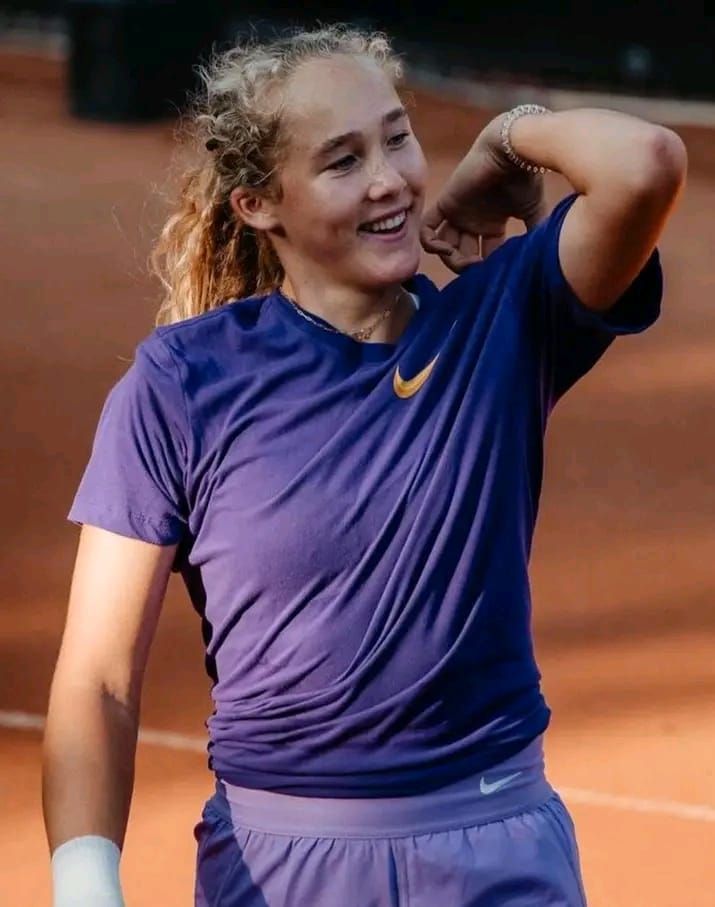
In a sport where humility is often expected and credit is routinely shared with coaches, teams, and family, Mirra Andreeva’s words cut through the noise with refreshing honesty. When the teenage tennis sensation recently said, “I would like to thank myself,” it wasn’t arrogance—it was a powerful statement of self-belief, resilience, and personal accountability that defines her rapid rise on the WTA Tour.
At just 16, Andreeva has already experienced more pressure than most players face in an entire career. Thrust into the global spotlight, compared to legends before she has even fully grown into her game, she has had to mature quickly—mentally as much as physically. Her statement reflects that inner journey. Behind every breakthrough win, late-night practice session, and tough loss processed in silence, there is a young athlete learning to trust herself.
Andreeva’s rise has not been accidental. While fans often focus on her shot-making flair, court intelligence, and fearless baseline game, the real story lies in her mindset. Tennis is an unforgiving sport: there are no teammates to hide behind, no substitutions, and no shortcuts. Every mistake is public. Every comeback must come from within. When Andreeva thanks herself, she is acknowledging the unseen work—the discipline to train when motivation dips, the courage to play freely against higher-ranked opponents, and the emotional strength to bounce back after setbacks.
In recent tournaments, Andreeva has shown a maturity beyond her years. She has competed toe-to-toe with seasoned professionals, handled tense moments with calm composure, and spoken openly about learning from losses rather than fearing them. Her words suggest a player who understands that success isn’t just about talent—it’s about perseverance. Thanking herself is her way of honoring that process.
There is also a broader message in Andreeva’s quote, especially for young athletes watching her journey. In a world that often demands external validation, her statement is a reminder that self-recognition matters. Confidence doesn’t always have to come from trophies or applause; sometimes it comes from knowing you gave everything you had, even when the outcome wasn’t perfect.
Importantly, Andreeva has never dismissed the role of her coaches or support system. Instead, her comment highlights balance—gratitude for guidance, but also respect for personal effort. It’s a mindset that champions ownership: when things go right, you earn it; when things go wrong, you learn from it.
As Mirra Andreeva continues her ascent, one thing is clear: her greatest weapon may not be her backhand or court coverage, but her self-awareness. By thanking herself, she signals a young champion in the making—one who understands that belief starts from within.

 dam
dam
 Musa
Musa