 laddylovethy
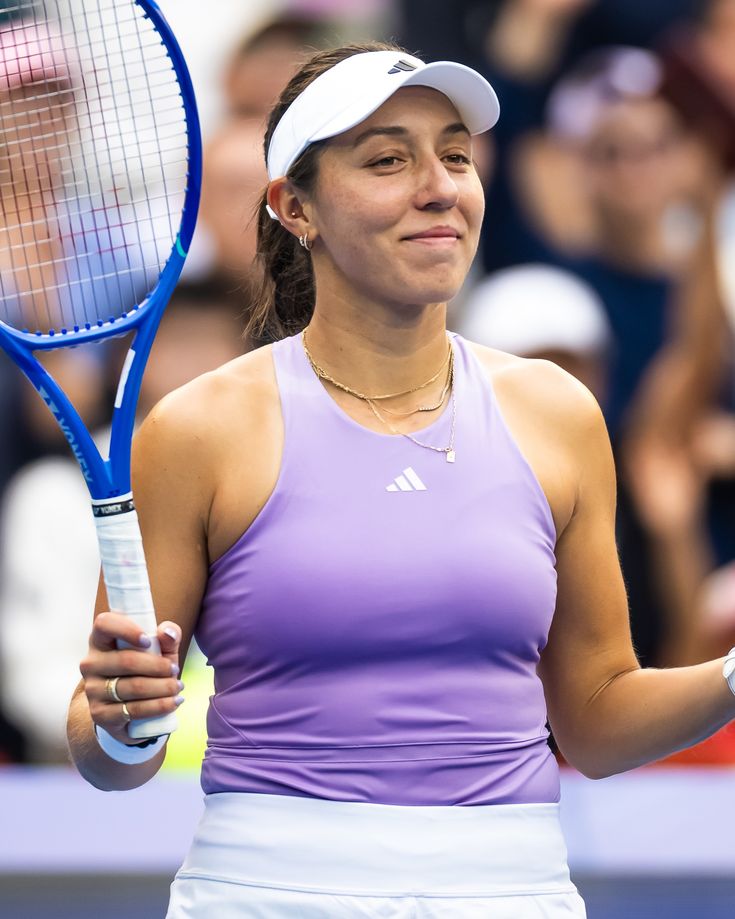
Jessica Pegula, currently seeded No. 6 at the first Grand Slam of the year, is speaking with equal parts enthusiasm about her on-court ambitions and her growing off-court media footprint. At a press conference during Australian Open Media Day, Pegula outlined plans to expand The Player’s Box podcast a project she launched with longtime friends and fellow players Madison Keys, Jennifer Brady, and Desirae Krawczyk and reflected on one of the most competitive rivalries in women’s tennis
Pegula,entered the professional tennis scene as a consistent and talented competitor, steadily rising through rankings to become one of the sport’s most respected players. Her performance throughout the 2025 season which included a run to the US Open semifinals and a final appearance at the Wuhan Open set the stage for a strong start to her 2026 campaign and provided momentum going into Melbourne. Now, off the court, Pegula intends to cultivate a broader presence in tennis media through The Player’s Box her player-driven podcast that debuted during the 2025 US Open.
Growing the Player’s Box Podcast
“What started as a bit of fun with friends has really taken off,” Pegula said of The Player’s Box, which she hosts with Keys, Brady, and Krawczyk. The podcast was conceived in the summer of 2025 and has since released a steady stream of episodes offering a rare, unfiltered window into the lives of touring professional athletes. Unlike traditional press conferences, the format encourages candid discussions about training routines, travel experiences, locker-room culture, pop culture, match preparation, and behind-the-scenes tour stories.
“We only really got started during the US Open, and there wasn’t much going on in the tennis world afterward,” Pegula explained. “This year we want to build a full season around the slams and other big events. Ideally, we’ll be recording from different stops on tour and sharing more of what goes on behind the scenes.”
The concept became an immediate point of engagement among fans because it diverges from typical player interviews and offers an authentic perspective from active competitors themselves. It also positions The Player’s Box as a parallel conversation to other tennis lifestyle shows — such as the popular male-focused Nothing Major podcast and highlights a growing trend in athletes leveraging direct media platforms to build deeper connections with followers.
Pegula and her co-hosts have already recorded segments from tournament sites, and they’re planning additional episodes throughout the Australian Open. “We’re going to record again tomorrow, so we’ll have content from here in Melbourne,” she said, emphasizing that synchronizing schedules among four top-flight professionals remains both a logistical puzzle and a creative opportunity.
The Sabalenka Rivalry: Competitive Fuel
While The Player’s Box gives fans a fresh way to engage with players’ lives, Pegula’s focus in Melbourne remains squarely on competition. A key narrative heading into the first major of 2026 centers .
Pegula acknowledged that Sabalenka has the upper hand in their rivalry to date, with the Belarusian winning a majority of their meetings. “Obviously, she has beaten me more times,” Pegula said. Yet she also noted that their matches often produce “really good tennis,” describing the encounters as high-quality tests that push both players to perform at their best.
Their competitive history intensified in 2025, when Sabalenka defeated Pegula in three of their four matches, including a closely contested semifinal at the WTA Finals. Still, Pegula produced some of her most vibrant tennis against Sabalenka, particularly in long rallies and dramatic moments that have drawn attention for their physicality and intensity — qualities that define rivalries at the highest tier of the women’s game.
“It’s fun. She challenges me. She pushes me to figure out how to become better,” Pegula said. Her perspective reflects a broader understanding of rivalry: not merely as an adversarial statistic on head-to-head records, but as a recurring test that sharpens competitive edge. She emphasized that even in losses, the lessons from those matches when measured against someone at the very top of the game are valuable for long-term development.
Pegula’s remarks demonstrate both respect for Sabalenka’s strengths and confidence in her own capacity for growth. “Beating her on a bigger stage would be something that I am trying to strive for,” she added, hinting at the special significance that a victory in a high-stakes match (such as at a Grand Slam) would hold for her career.
Looking Ahead at the Australian Open
Pegula’s draw in Melbourne adds further intrigue: she is scheduled to face defending champion and podcast co-host Madison Keys in the fourth round, assuming both players navigate their earlier matches. A showdown between two American stars at this stage would immediately reframe the tournament narrative and potentially provide Pegula with crucial momentum en route to later rounds.
For Sabalenka, the path to another major trophy includes managing expectations as world No. 1 and navigating her own competitive rivalries — with not only Pegula but a broader field of top players whom she views as threats. The mutual acknowledgement of strong competition among the WTA’s elite signals a season likely marked by shifts in momentum and headline-making matches.
Balancing Dual Ambitions
Pegula’s approach reflects a balance between athletic performance and personal brand development. Her commitment to expanding The Player’s Box complements her pursuit of on-court excellence, illustrating how modern athletes are increasingly multifaceted: not only champions of sport but also creators of media that deepen fan connection and broaden their professional influence.
In a press landscape that often narrows discussion to match results and rankings, Pegula’s dual focus on storytelling and competition signals a broader evolution in how tennis professionals manage their public profiles. Her plans for a year-round podcast schedule anchored but not confined to the majors suggests that players are not waiting for media opportunities to come to them; they are building those platforms themselves.
As Melbourne’s summer heat gives way to weeks of elite tennis in January and February, Jessica Pegula remains a compelling figure both on and off the court. Her commitment to personal growth whether through The Player’s Box or in pursuit of a breakthrough win against one of the game’s fiercest competitors.


 Musa
Musa
 Seun Oluwaseun
 dam
dam