 dam
dam
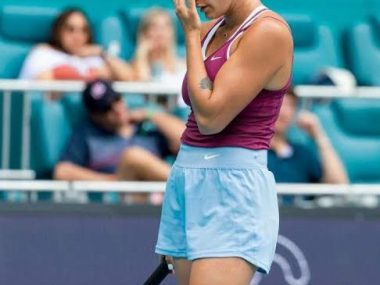
An outspoken former Grand Slam champion has ignited debate in the tennis world after claiming that Aryna Sabalenka’s unusually relaxed mindset played a decisive role in her Australian Open final defeat. The comment has split opinion, with some praising Sabalenka’s maturity under pressure, while others argue that her looseness at crucial moments cost her the biggest prize in Melbourne.
Sabalenka arrived at the Australian Open final as the clear favorite, armed with one of the most powerful games in women’s tennis and carrying the confidence of a reigning Slam champion. Throughout the tournament, she overwhelmed opponents with her explosive serve, fearless groundstrokes, and visible self-belief. But according to the ex-Slam winner, that same calm demeanor became a double-edged sword on finals night.
Speaking after the match, the former champion suggested Sabalenka appeared “too relaxed” for the magnitude of the occasion. Rather than tightening her focus at key moments, she allegedly played with the same carefree approach that had worked so well in earlier rounds. In a Grand Slam final, however, margins are razor-thin, and any lapse can quickly swing momentum.
The criticism centers on Sabalenka’s shot selection during pivotal games. At times when patience and percentage tennis might have steadied her, she went for high-risk winners, handing her opponent crucial points. The ex-Slam winner described these moments as Sabalenka “giving away” the final — not because of a lack of ability, but because of choices that did not reflect the situation.
Still, not everyone agrees with that assessment. Many analysts argue that Sabalenka’s relaxed attitude is precisely what has transformed her into a Grand Slam champion. In previous seasons, she struggled with nerves, double faults, and emotional swings in big matches. Her calmer presence in Melbourne was widely praised as evidence of growth, not complacency.
Supporters also point out that finals are often decided by fine details and exceptional performances from both players. Sabalenka did not collapse; she was pushed, challenged, and ultimately outplayed in key phases. Labeling the loss as something she “gave away” may overlook the quality and composure of her opponent under immense pressure.
What is clear is that Sabalenka’s evolution as a player is still ongoing. Balancing freedom with discipline remains one of the hardest tasks at the elite level, especially on the sport’s biggest stages. The Australian Open final may serve as another valuable lesson rather than a setback.
As the season continues, all eyes will be on how Sabalenka responds. If history is any guide, criticism like this could fuel her hunger rather than dent her confidence. One final does not define a champion — but how she adapts after it just might.

 dam
dam
 Musa
Musa